
MediFacility
Healthcare Modular Construction
The increased popularity of modular healthcare construction certainly isn’t new. In fact, the need for permanent, temporary and flexible healthcare building solutions has been a key concern in the industry for several years. The reality is that modular is the future of healthcare construction, and it offers a number of opportunities over traditional construction.
All parts are manufactured off-site in a carefully controlled environment, and designed to your specification. Whether you need a solution for your hospital or you a micro-clinic in a remote location.
From new construction projects to a remodel, you’ll work closely with our design department to create the facility you need most.
Modular construction not only delivers on quality, but offers a long-term cost effective solution, enabling you to budget for more. In almost all cases you get a higher specification that traditional healthcare construction, without the extended time frame and additional constraints of budget
Modular construction is increasingly popular in the healthcare sector due to its unique advantages and ability to address the specific needs of healthcare facilities. Here’s an overview:
Benefits of Modular Healthcare Construction
-
Speed of Delivery: Modular units can be prefabricated off-site while site work is underway, significantly reducing the overall project timeline. This is crucial for healthcare facilities that need to respond quickly to increasing patient demands.
-
Cost Efficiency: The streamlined construction process can lead to lower labor costs and reduced material waste, ultimately resulting in lower project costs. Predictable timelines can also help manage budgets more effectively.
-
Quality and Safety: Factory-controlled environments ensure higher quality standards and consistent construction practices. This can lead to safer and more reliable healthcare facilities.
-
Flexibility and Scalability: Modular units can be easily reconfigured or expanded as healthcare needs evolve. This adaptability is especially important in response to changing patient populations or emerging health crises.
-
Sustainability: Many modular healthcare solutions prioritize energy efficiency and sustainability, incorporating eco-friendly materials and practices that reduce the environmental footprint.
Applications in Healthcare
-
Temporary Facilities: Modular units are ideal for urgent care centers, vaccination clinics, or surge capacity during pandemics.
-
Patient Rooms: Prefabricated patient rooms can be quickly assembled, allowing for rapid expansion of hospital capacities.
-
Diagnostic and Treatment Centers: Modular construction can efficiently create specialized units for imaging, labs, or outpatient services.
-
Administrative Spaces: Offices and administrative areas can be modularized, providing flexibility in layout and space usage.
Modular construction offers a promising solution for addressing the evolving needs of healthcare facilities, balancing speed, cost, and quality.
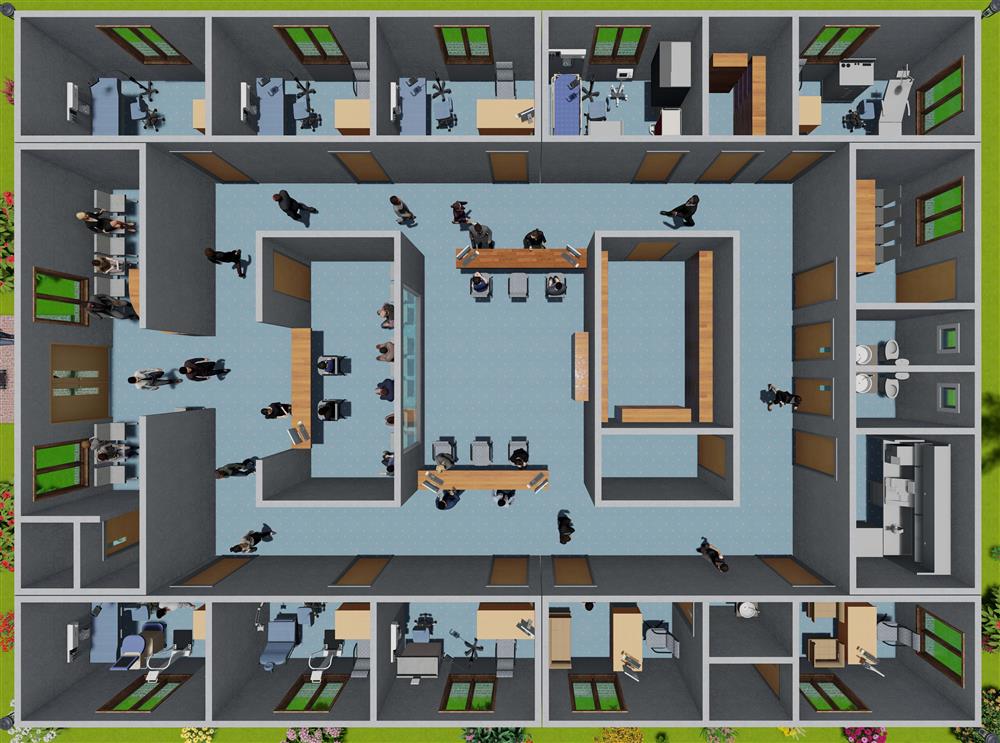
Modular clinics and medical offices are designed to provide a comprehensive range of medical services in a convenient and efficient manner. These buildings can be tailored to suit specific healthcare needs, accommodating various departments and specialties. From general practitioner clinics to dental offices and specialty clinics, modular construction allows for the seamless integration of medical equipment, examination rooms, waiting areas, and administrative spaces. The ability to customise and expand these buildings as required makes them an ideal choice for both established healthcare providers and emerging medical practices. Furthermore, all facilities are fully HTM, HBN, building code and planning permission compliant.
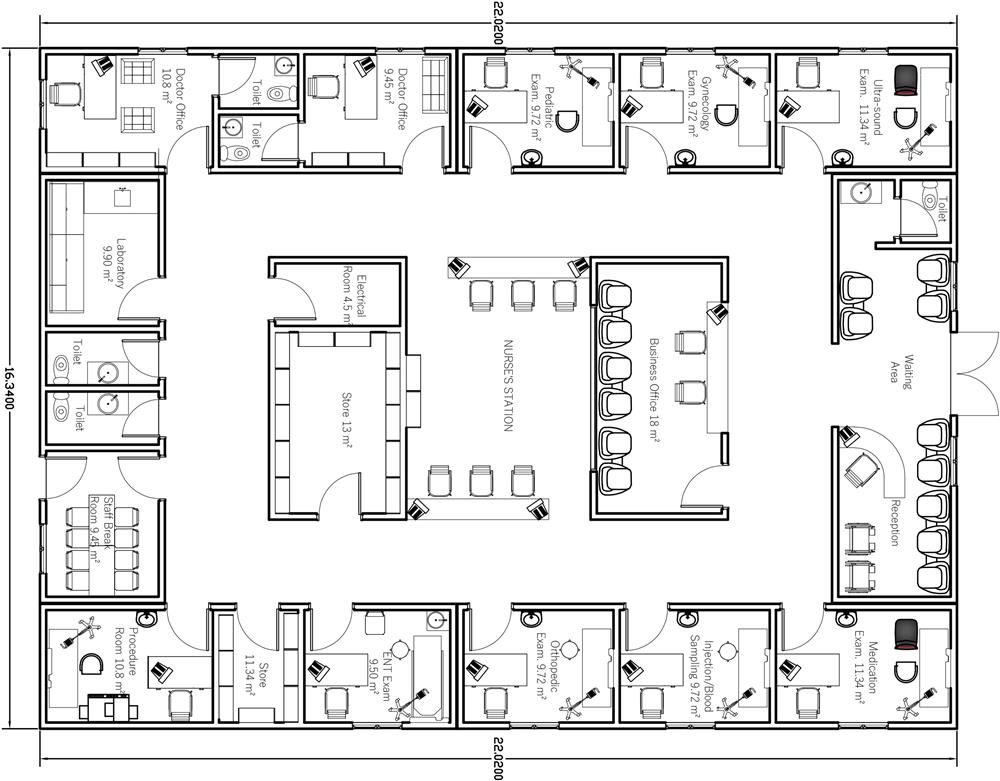
In this example MediFacility design modular outpatient center with total area 360 m² including:
- 1- Examination Rooms: 7 rooms.
- 2- Ultrasound Room: Yes.
- 3- Doctor Offices: 2 offices.
- 4- Laboratory: Yes
- 5- Break room: Yes.
- 6- Nurse station: Yes
- 7- Reception: Yes
- 8- Store: Yes
- 9- Electrical room: Yes
- 10- Waiting area: Yes